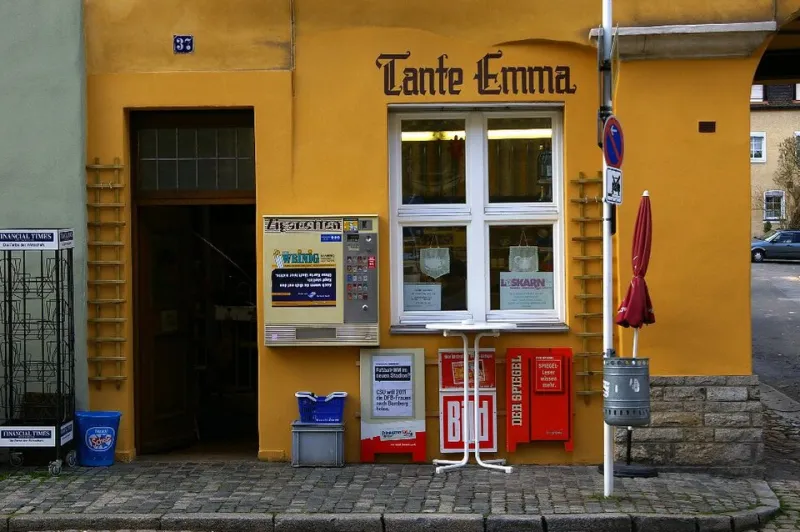
Your Customers' Inboxes Are Full. Their Letterboxes Aren't.

Photo: Eva Rinaldi, CC BY-SA 2.0, via Wikimedia Commons
Somewhere along the way, print got a bad reputation among small businesses. It became the thing you did before you could afford 'proper' digital marketing — the training wheels channel. Meanwhile, everyone piled onto Facebook ads, email campaigns and SEO, and the result is exactly what you'd expect: inboxes groaning, feeds saturated, and the average person scrolling past more ads before breakfast than their grandparents saw in a decade.
Here's the contrarian take: the crowding is precisely why print is worth another look. Marketing isn't about being everywhere — it's about being somewhere your competitors aren't.
The Letterbox Is the New Frontier
Think about how you consume the two channels. An email arrives, gets deleted in two seconds, unread. A flyer through the door gets carried to the kitchen table, glanced at, maybe stuck on the fridge. It has a physical presence in someone's home that no Instagram story can match. Studies keep showing direct mail gets noticed and kept for days — can your last email newsletter say the same?
And crucially, for a local business, print is natively targeted. A pizza takeaway in Leeds doesn't need to reach the whole world. It needs to reach the four streets around it. A leaflet drop does that with surgical precision that no digital ad budget could match at the same price.
Clever Print Is Alive and Well
Look around and you'll spot businesses doing this well. Independent cafés scribbling witty messages on chalkboards that end up photographed and shared online — print doing double duty as social content. breweries putting genuinely collectable artwork on bottle labels that customers keep. Local shops running sticker promotions that turn a plain bag into a little piece of brand identity people actually want.
None of this required an agency. It required a bit of imagination and a print run.
What £50 Actually Buys You
This is where print gets interesting for the budget-conscious. Fifty quid, roughly speaking, gets you:
- 500 A5 flyers from an online print shop, often less if you catch a sale
- 250 business cards — which still get kept, pinned and passed on
- A couple of hundred stickers in two or three sizes
- A handful of A3 posters for shop windows and community boards
Try buying 500 meaningful digital impressions for £50 and see how far you get. You won't.
Where to Put It: A Quick Deployment Guide
Print without placement is just recycling. A few thoughts on getting it seen:
- The radius rule: target the streets most likely to actually visit you. Fifteen minutes' walk or drive, not 'wherever the drop company offers'.
- Windows beat walls: shop windows, café counters, library noticeboards, community centres, the chip shop that'll do a swap with you. Ask permission, look tidy.
- Stickers travel: put them on every bag, every box, every van. Your customers become your distribution network for pennies.
- Give the flyer a job: a specific offer with a deadline ('£2 off any flat white this week') massively outperforms a pretty picture with your logo on it.
The Honest Caveats
Print isn't magic. A badly designed leaflet in the wrong hands is landfill with your logo on it, and there's no analytics dashboard telling you how the drop went — you'll need to ask customers how they heard about you, or use a simple promo code to track responses.
But that's a design and tracking problem, not a channel problem. And unlike digital, where costs creep and algorithms shift under your feet, a stack of 500 flyers costs what it costs. Fixed, known, done.
Small Money, Real World
Digital marketing is essential and we'd never tell you to abandon it. But if your entire budget lives online, you're competing in the noisiest, most expensive arena available — against businesses with a hundred times your spend.
Meanwhile, the letterbox sits there, half-empty and unloved. For the price of a round of drinks, you can put your business literally into the hands of your neighbours. In a world where everyone's shouting into screens, that's not old-fashioned. That's just smart.