Six Lessons From a Foggy Sunday Field: The Sales Masterclass Hiding at Your Local Car Boot Sale
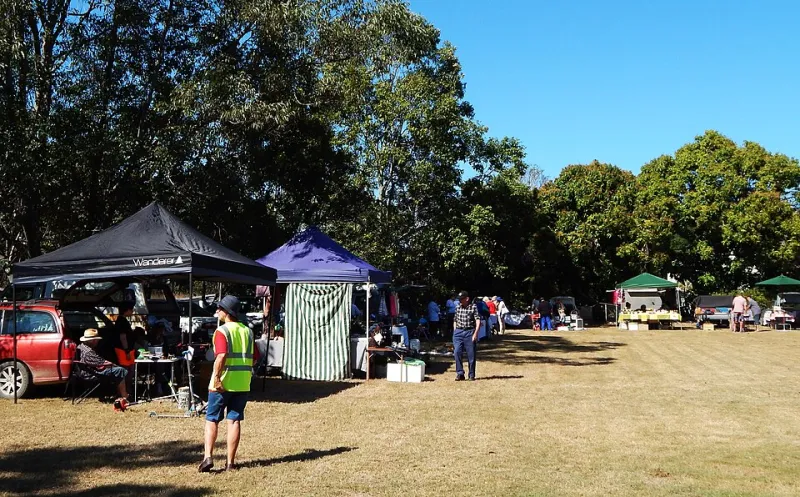
Photo: RegionalQueenslander, CC BY-SA 4.0, via Wikimedia Commons
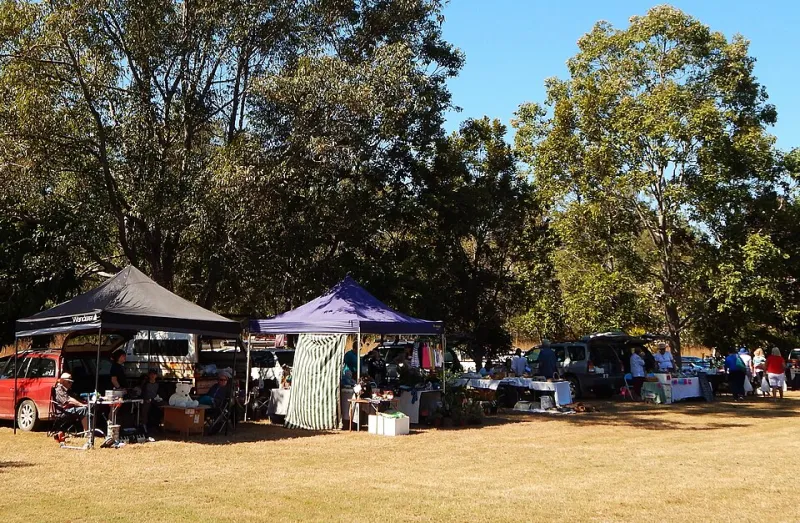
There's a moment, usually around 6:45 on a Sunday morning, when a car boot sale transforms from a car park with stuff in it into a fully functioning marketplace. Sellers are unloading boxes by torchlight, seasoned buyers are circling with torches of their own, and somewhere a man is asking forty pence for a kettle that is, frankly, forty pence too expensive.
It's chaotic, it's British, and it is — genuinely — the best free sales training in the country. No course, webinar or LinkedIn guru can teach you what four hours behind a pasting table will. Here's what the field knows, and how to bottle it for your own business.
Lesson One: The First Price Is a Conversation, Not a Conclusion
At a boot sale, nobody expects the sticker to be the story. £5 means "let's talk." The seller who opens high but cheerfully isn't being shady — they're opening a negotiation both parties enjoy.
The translation: Stop treating your pricing as fixed gospel in your marketing. Offer bundles, tiers, or a "starter" option. A web designer might list a one-page site at £299 alongside a full package at £899. The cheap option anchors the expensive one, and the expensive one makes the cheap one look like a bargain. Both do work.
Lesson Two: Watch Hands, Not Faces
Experienced booters will tell you: people pick things up before they buy them. The punters who linger, who turn an item over, who ask "how much is this worth then?" — they're already halfway to the till. The ones who just drift past were never customers, no matter how good your pitch.
The translation: Look at your actual data before you write a single word of copy. Which products get added to baskets and abandoned? Which blog posts do people actually finish? Your analytics are the modern equivalent of watching who picks things up. Sell harder to the pickers-up, and stop shouting at the drifters.
Lesson Three: Urgency You Can Actually Feel
Boot sale urgency isn't a countdown timer on a website. It's real: the seller is leaving at noon, the queue is forming, and that boxed Hornby set will not be here next Sunday. It works because it's true.
The translation: Fake scarcity is the fastest way to lose trust, and customers can smell a permanently "ending soon" sale from a mile off. If you want urgency, build it honestly — a genuine seasonal product, a limited run you actually capped, a market stall that really does pack up at 3pm. Small businesses have an advantage here: your constraints are real, so use them.
Lesson Four: The Box Trick
Watch a pro seller and you'll see it: "Everything in this box, a pound." Suddenly items that weren't selling individually are moving in handfuls. The box does the selling — it simplifies the decision and makes the buyer feel clever.
The translation: Decision fatigue kills small sales. Instead of twenty services, offer a clear "everything included" package with one price. A cleaner who sells "one price, any car, inside and out" will out-book the one with a confusing matrix of add-ons. Simplicity is a discount you don't have to pay for.
Lesson Five: Location Is Half the Pitch
The seller by the entrance with the bacon roll van next door shifts more stock than the one in the far corner with better bargains. It's not fair. It is, however, predictable.
The translation: On a budget, placement beats polish. A free Google Business Profile with good photos will outperform a beautiful website nobody finds. Turning up consistently in one Facebook group or one local market beats scattering yourself thinly everywhere. Stand where the footfall already is.
Lesson Six: Pack Up Smarter Than You Arrived
Every booter keeps a mental note of what sold, what didn't, and what the bloke on the next pitch was doing differently. Next week, the table is laid out differently. That's the whole discipline of marketing in one habit.
The translation: Review monthly, adjust, repeat. What sold? What flopped? Which post got shared and which got silence? You don't need an agency dashboard to do this — a notebook and an honest hour will do.
The best part of all this? Total cost of your car boot MBA: the price of a pitch (usually a tenner) and a bacon roll. Cheaper than any course, and the certificate is a fuller till.